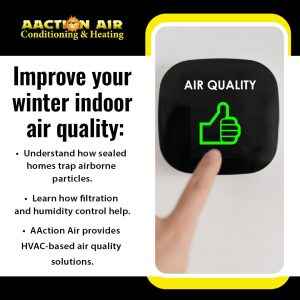
Running your furnace all winter does not inherently worsen indoor air quality. The real issue lies in how well your heating system manages air filtration, humidity levels, and ventilation. Here in Lithia Springs and across the Atlanta metro area, homeowners often notice increased dust, dryness, and stale air during heating season, not because their furnace creates these problems, but because winter conditions and system maintenance gaps allow them to develop. At AAction Air Conditioning & Heating Co., we help homeowners understand what actually affects indoor air quality in Atlanta and how proper HVAC care keeps homes comfortable.
What Changes Indoors When Your Furnace Runs All Winter
Winter heating fundamentally alters your home’s indoor environment in ways that directly impact air quality if not properly managed.
Reduced Fresh Air Exchange in Winter
Cold weather keeps windows and doors closed for extended periods. Fresh outdoor air that would normally dilute indoor pollutants stays out, while contaminants from cooking, cleaning, pets, and daily activities accumulate inside. This reduced ventilation creates a cycle where the same air circulates repeatedly through your home. Without proper filtration, pollutant concentrations rise steadily. Atlanta homes face this challenge even during our relatively mild winters, as heating systems run regularly from December through February. We often see this effect intensify in newer, tightly-sealed homes where energy efficiency reduces natural air exchange rates. The sealed environment requires more attention to indoor air quality management.
Longer Heating Cycles and Air Recirculation
Air recirculation refers to your HVAC system moving the same indoor air through the furnace and back into living spaces. During winter, your furnace runs longer cycles to maintain comfortable temperatures. Each cycle pulls air from your rooms, heats it, and returns it through the ductwork. This continuous movement keeps dust, pet dander, pollen, and other fine particles suspended rather than settling. Standard furnace filters catch larger particles but allow smaller contaminants to pass through. Homes in Marietta, Roswell, and surrounding areas typically see furnace run times increase significantly during January and February.
Does a Furnace Make Indoor Air Quality Worse by Itself?
No, a properly maintained furnace does not generate indoor air pollutants. The furnace itself simply heats air. It doesn’t create dust, allergens, or other contaminants. Problems arise when filtration systems fail to capture particles effectively, when ductwork contains accumulated debris, or when humidity levels drop too low during heating operation. A furnace operating with clean filters, sealed ducts, and proper humidity control actively supports good air quality. The difference between a furnace that maintains good air quality and one that allows problems lies entirely in system maintenance and supporting equipment. Gas furnaces produce combustion byproducts, but properly functioning units vent these safely outdoors through dedicated flue systems. Issues develop not from heating equipment itself, but from gaps in air quality management that become more noticeable during extended heating seasons.
Common Indoor Air Quality Problems Linked to Winter Heating
Atlanta homeowners report several recurring air quality concerns during the winter months when furnaces run most frequently. Recognizing these patterns helps you address issues before they impact comfort and health.
Dry Indoor Air and Humidity Imbalance
Heating naturally lowers indoor moisture levels as warm air holds less relative humidity. Most homes feel most comfortable with indoor humidity between 30% and 50%. Winter heating often drops humidity below 30%, creating dry conditions that affect both comfort and air quality. Low humidity allows fine particles to remain airborne longer and increases static electricity.
Excessively dry air also makes dust more noticeable as particles fail to absorb enough moisture to settle naturally. Whole-home humidifiers work with your furnace to maintain balanced moisture levels throughout the heating season. These systems add measured moisture to heated air automatically, maintaining consistent humidity without creating damp spots. We install humidifiers and dehumidifiers that integrate seamlessly with existing furnace equipment, providing year-round moisture balance for homes throughout the Atlanta metro area.
Dust, Allergens, and Fine Particles
Constant furnace operation increases the visibility of dust accumulation. Forced air systems move particles from surfaces into the breathing zone, where they become noticeable. Pet dander, pollen tracked indoors, dust mites, and skin cells circulate more actively during the winter months when homes stay closed. Standard one-inch furnace filters capture only larger particles, allowing microscopic contaminants to pass through. An HVAC air filtration upgrade removes significantly more airborne particles with filters rated MERV 8-13.
Odors and Stale Indoor Air
Cooking smells, pet odors, and household activity byproducts linger longer in closed winter homes. Without regular fresh air exchange, these odors intensify. An air purification system in Atlanta, installed by professionals, helps neutralize odors at the source.
How HVAC Air Filtration Affects Winter Indoor Air Quality
Your furnace filter serves as the primary defense against airborne particles during heating season. Filter quality and maintenance directly determine how effectively your system manages indoor air quality.
Why Standard Furnace Filters Are Often Not Enough
Most furnaces come with basic one-inch fiberglass or pleated filters rated MERV 1-4. These filters protect equipment from large debris but capture very little of the dust and allergens affecting air quality. According to the EPA, filters with a MERV of 11 remove roughly 20% of the particles between .3 and 1 micron. The filter’s primary design purpose focuses on preventing large debris from damaging blower motors and heat exchangers, not on improving indoor air quality. Upgrading to higher-efficiency filters rated MERV 8-13 improves particle capture significantly without restricting airflow in properly maintained systems. These medium-efficiency filters capture smaller particles, including mold spores, pet dander, and dust mite debris. HVAC air filtration professionals recommend checking filter specifications and replacement schedules before winter heating begins.
When Air Filtration Systems and Air Purifiers Become Necessary
Air filtration systems and air purifiers go beyond standard filters to address specific indoor air concerns. These systems integrate with your HVAC equipment to treat all air passing through the furnace. They remove particles, neutralize odors, reduce biological contaminants, and destroy viruses using technologies like HEPA filtration, UV light, or electronic air cleaning. Experts performing air purifier installation in Atlanta recommend these when family members experience persistent allergies, when homes contain multiple pets, or when standard filtration improvements don’t resolve concerns. At AAction Air Conditioning & Heating Co., we evaluate your specific situation and recommend solutions matched to your needs.
| Filtration Level | Particle Capture (Key Range) | Best Application |
| MERV 1-4 (Standard) | <20% (3-10 µm) | Equipment protection |
| MERV 8-11 (Medium) | ≥20-65% (1-3 µm); ≥70-85% (3-10 µm) | General home use |
| MERV 13-16 (High) | ≥50-95% (0.3-1 µm); ≥85-95% (1-10 µm) | Allergies, pets |
| HEPA | ≥99.97% (0.3 µm) | Medical-grade needs |
The Role of Humidity Control During the Heating Season
Maintaining proper moisture levels directly affects both comfort and air quality during Atlanta winters. Dry winter air results from heating’s natural dehumidifying effect combined with reduced outdoor moisture infiltration. Indoor humidity below 30% increases respiratory discomfort, reduces comfort levels, and allows fine particles to remain suspended longer. Conversely, excessive humidity above 50% encourages mold growth and increases dust mite activity. You can install a humidity control system in Atlanta that works with your furnace to add measured moisture to heated air before distribution. These whole-home systems maintain consistent humidity levels automatically, unlike portable units that humidify only single rooms. We install humidifiers and dehumidifiers that integrate with your heating equipment to maintain balanced moisture throughout your Lithia Springs home.
How to Recognize Winter IAQ Problems in Your Home
Certain signs indicate your home needs professional indoor air quality attention during heating season. Persistent dust accumulation despite regular cleaning, family members experiencing unexplained respiratory symptoms that improve away from home, or air that feels consistently stale or dry all signal potential issues. Indoor pollutant levels often exceed outdoor concentrations by factors of 2-5, especially in tightly sealed homes during heating season with limited ventilation. Visible mold growth, persistent odors, or noticeable humidity problems also warrant professional evaluation. We assess your specific situation and recommend system-level solutions to improve the home air quality for Atlanta residents, from air filtration upgrades and humidifier installation to whole-home air purifiers that address your actual concerns.

Practical Ways to Improve Home Air Quality During Winter
These HVAC-focused approaches help Atlanta-area homeowners maintain better air quality throughout heating season.
Upgrade Filtration and Purification Systems
Replace standard one-inch filters with higher-efficiency options rated MERV 8 or above for immediate improvement. Check filter fit carefully to prevent air bypass around filter edges. Measure your current filter before purchasing replacements to ensure proper sizing. Consider whole-home air filtration systems and air purifiers for more thorough particle reduction. Change filters according to manufacturer schedules, typically every 60-90 days during heavy heating use, though homes with pets may require more frequent changes. We help homeowners select appropriate filtration upgrades that balance air cleaning effectiveness with system airflow requirements.
Maintain Proper Humidity Levels
Monitor indoor humidity with an inexpensive hygrometer available at hardware stores. Place the hygrometer in your main living area away from direct heating vents for accurate readings. Target humidity between 35-45% during winter months for optimal comfort. Whole-home humidifiers integrated with your furnace provide consistent moisture addition without creating localized damp spots or requiring daily attention.
Schedule Preventive HVAC Maintenance
Annual furnace maintenance before heating season ensures your system operates efficiently and supports good air quality throughout winter. Our NATE-certified technicians clean blower components, check ductwork connections, verify proper airflow, and inspect filtration system performance. We recommend scheduling this service in early fall before Atlanta’s heating season begins. Our Premier Service Plan provides priority customer status, a 1-year parts and labor guarantee on repairs, and discounts on repairs and installations.
Is Winter Indoor Air Quality a Bigger Issue in Atlanta Homes?
Atlanta’s climate creates specific indoor air quality challenges during heating months. While our winters stay milder than northern regions, heating systems still run regularly from December through February when overnight temperatures drop into the 30s and 40s. The combination of moderate cold weather, natural high humidity potential, and sealed homes creates conditions where air quality management becomes important. Homes in Lithia Springs, Marietta, Alpharetta, Roswell, Dallas, Hiram, Acworth, Cartersville, Druid Hills, and throughout the metro area experience similar patterns. Atlanta’s occasional temperature swings, warm days followed by cold nights, stress HVAC systems, and require balanced approaches to improve the home air quality that homeowners in Atlanta expect.
When to Call a Professional for Indoor Air Quality Help
Certain situations warrant expert assessment beyond basic filter changes and humidity monitoring. Contact us when you notice persistent dust accumulation despite regular cleaning, when family members experience unexplained respiratory symptoms that improve away from home, or when the air feels consistently stale or dry regardless of filter changes. Visible mold growth, persistent odors that don’t respond to cleaning, or noticeable humidity problems also indicate needs for professional evaluation. Homes with multiple pets, recent renovations, or aging HVAC equipment benefit from professional assessment even without obvious symptoms. AAction Air Conditioning & Heating Co. assesses your specific situation and recommends system-level solutions for indoor air quality in Atlanta matched to your home’s requirements and your family’s health considerations. We’ve been serving Atlanta-area homeowners since 1999 with honest assessments and solutions.
Protecting Indoor Air Quality All Winter Long
Running your furnace throughout Atlanta’s winter months does not inherently create poor indoor air quality. The combination of reduced ventilation, continuous air recirculation, insufficient filtration, and humidity imbalance causes the issues homeowners notice during heating season. Proper filtration, humidity control, and regular maintenance work together to keep indoor air clean and comfortable. At AAction Air Conditioning & Heating Co., we help homeowners in Lithia Springs and across the Atlanta metro area develop air quality strategies. Contact us at (701) 203-2505 or charles@aactionair.net to discuss solutions, from filter upgrades and humidifier installation to air purifier installation in Atlanta. We’re here to be more comfortable all winter long.